
Warning: This post discusses menstruation openly. If this topic makes you uncomfortable, that’s exactly why we need to talk about it.
The Hidden Crisis:
Every month, thousands of girls across Ghana miss school. Not because they’re sick. Not because they don’t want to learn. But because they menstruate.
Let that sink in.
In 2025, in a country working hard toward quality education for all, we’re still allowing biology—a natural, normal bodily function—to rob girls of their right to education.
This is the reality of period poverty in Ghana, and it’s time we stopped whispering about it and started shouting.
The Numbers Don’t Lie:
According to recent studies:
- 1 in 10 African girls miss school during menstruation
- Average of 4-5 school days missed per month
- That’s 20-25% of the school year lost
- 65% of Ghanaian girls can’t afford sanitary products
Do the math: A girl who misses 5 days every month misses 50-60 days per academic year. That’s almost 3 months of learning lost simply because she menstruates.
How can we expect girls to compete academically when they’re absent 25% of the time? How can we talk about gender equality in education while ignoring this fundamental barrier?
We can’t. And we won’t.
Meet Esi: A Story Too Common:
Esi (not her real name) is a 14-year-old JHS 2 student in Tema. Bright, ambitious, and consistently in the top 5 of her class. She dreams of becoming an engineer.
But every month, Esi faces a nightmare.
“When my period starts, I panic,” she tells us quietly. “My family can’t afford pads. Sometimes I use old cloth, but it leaks. I’ve stained my uniform before, and students laughed at me. Now I just stay home those days.”
Home means missing:
- Important lessons and notes
- Quizzes and class participation marks
- Group projects and presentations
- The sense of belonging and normalcy
Home means falling behind academically, socially, and emotionally.
This is not okay.
Why Girls Suffer in Silence:
Period poverty isn’t just about lack of products. It’s compounded by:
1. Stigma and Shame
- Girls are taught menstruation is dirty, shameful, something to hide
- Many don’t understand what’s happening to their bodies
- Fear of embarrassment keeps them home
2. Inadequate School Facilities
- No private, clean toilets for changing
- No water for washing
- No disposal facilities
- No emergency supplies
3. Lack of Education
- Many girls get their first period with no preparation
- Parents often don’t discuss it
- Schools avoid the topic
- Boys are never educated, leading to teasing and harassment
4. Economic Barriers
- A pack of sanitary pads costs GH₵8-15
- Many families can’t afford it monthly
- Girls use unsafe alternatives: old cloth, newspapers, mattress foam
5. Cultural Taboos
- Menstruation seen as “women’s secret”
- Men often excluded from conversations
- Makes it hard to advocate for policy changes
The Devastating Consequences:
When girls miss school due to menstruation:
Academically:
- Fall behind in lessons
- Miss important assessments
- Lower grades and test scores
- Reduced chances of passing BECE
- Limited secondary school options
Socially:
- Feel isolated from peers
- Experience bullying and teasing
- Lose confidence and self-esteem
- Develop anxiety around menstruation
Long-term:
- Higher dropout rates
- Reduced lifetime earning potential
- Perpetuation of poverty cycle
- Limited career opportunities
According to UNESCO, missing school during menstruation significantly contributes to girls dropping out entirely.
This isn’t just about missing a few days. It’s about missing opportunities, missing futures, missing potential.
Clean the Red: Our Solution:
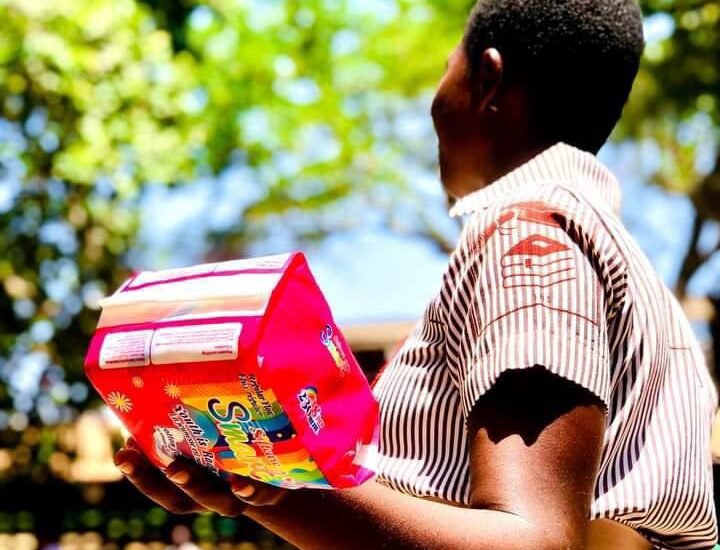
This is why The Chalk Talk Foundation launched Clean the Red—a comprehensive menstrual health program that addresses period poverty head-on.
What We Do:
1. Free Sanitary Product Distribution
- Monthly distributions to girls in partner schools
- Emergency supplies available at school clinics
- Reusable pad workshops for sustainability
2. Menstrual Health Education
- Age-appropriate education starting in Primary 5
- Understanding the menstrual cycle
- Proper hygiene practices
- Managing menstruation with confidence
3. Breaking the Stigma
- Open discussions in schools and communities
- Including boys in education (they’re future fathers, brothers, leaders)
- Parent workshops
- Community awareness campaigns
4. Improving School Facilities
- Partnering with schools to improve toilets
- Ensuring water availability
- Installing disposal bins
- Creating “period-friendly” spaces
5. Advocacy and Policy Change
- Working with government on free pad programs
- Advocating for menstrual health in curriculum
- Pushing for VAT removal on sanitary products
The Impact So Far:
Since launching Clean the Red in [Year]:
- 2,000+ girls have received free sanitary products
- 50+ schools have benefited from our program
- 5,000+ people reached through awareness campaigns
- 98% attendance improvement among participating girls during menstruation
But we’re just getting started. We need to reach 10,000 more girls.
Real Stories, Real Impact:
“I don’t have to miss school anymore” “Before Clean the Red, I missed 5 days every month. My grades suffered. Now, I have pads, I understand my body, and I’m back in the top 3 of my class. Thank you for giving me my education back.” — Abena, JHS 3 student
“My daughter’s confidence is back” “After she got teased for staining her uniform, my daughter didn’t want to go to school anymore. Clean the Red gave her products, education, and most importantly, confidence. She’s smiling again.” — Mrs. Mensah, Parent
“The boys learned respect” “Including boys in the education sessions changed everything. Now they understand, they don’t tease, and they’re actually supportive. It created a safer, more respectful school environment.” — Mr. Tetteh, Headteacher
What Needs to Change:
At Home:
- Parents: Talk to your daughters BEFORE their first period
- Fathers: Be involved. Period poverty affects your daughters too
- Families: Budget for sanitary products as essential, not optional
In Schools:
- Provide free pads or establish emergency supplies
- Create private, clean facilities for changing
- Educate ALL students (boys and girls) about menstruation
- Train teachers to handle menstrual emergencies with dignity
In Communities:
- End the stigma through open conversation
- Support organizations addressing period poverty
- Men: Be allies. This affects everyone
In Government:
- Remove VAT on sanitary products (they’re necessities, not luxuries)
- Fund school-based menstrual health programs
- Include comprehensive menstrual health in curriculum
- Ensure schools have adequate facilities
How You Can Help:
1. Donate
- GH₵25 = One month of pads for one girl
- GH₵75 = Three months for one girl
- GH₵300 = One year for one girl
- GH₵600 = Sanitary products for an entire classroom (25 girls) for one month
[DONATE TO CLEAN THE RED Button]
2. Volunteer
- Help with distribution events
- Facilitate education workshops
- Share your professional skills (healthcare, education, etc.)
VOLUNTEER NOW
3. Advocate
- Share this post
- Talk openly about menstruation
- Support policy changes
- Educate your own children properly
4. Partner With Us Corporate sponsorships make our work possible. Contact: info@thechalktalkfoundation.com
The Bottom Line:
No girl should miss school because she menstruates. Period.
Menstruation is not dirty. It’s not shameful. It’s not a secret. It’s biology. It’s normal. It’s natural. And it’s time we treated it that way.
When we give girls access to sanitary products and education, we give them access to their education, their confidence, and their future.
This is not charity. This is justice.
This is not a women’s issue. This is a human rights issue.
This is not optional. This is essential.
Join the Movement:
Clean the Red is more than a program—it’s a movement to end period poverty in Ghana once and for all.
Together, we can ensure every girl in Ghana can attend school with dignity, confidence, and opportunity—every single day of the month.
Are you with us?
Let’s break the silence. Let’s break the stigma. Let’s break the cycle.
#CleanTheRed #EndPeriodPoverty #MenstrualHealth #GirlsEducation #Ghana